
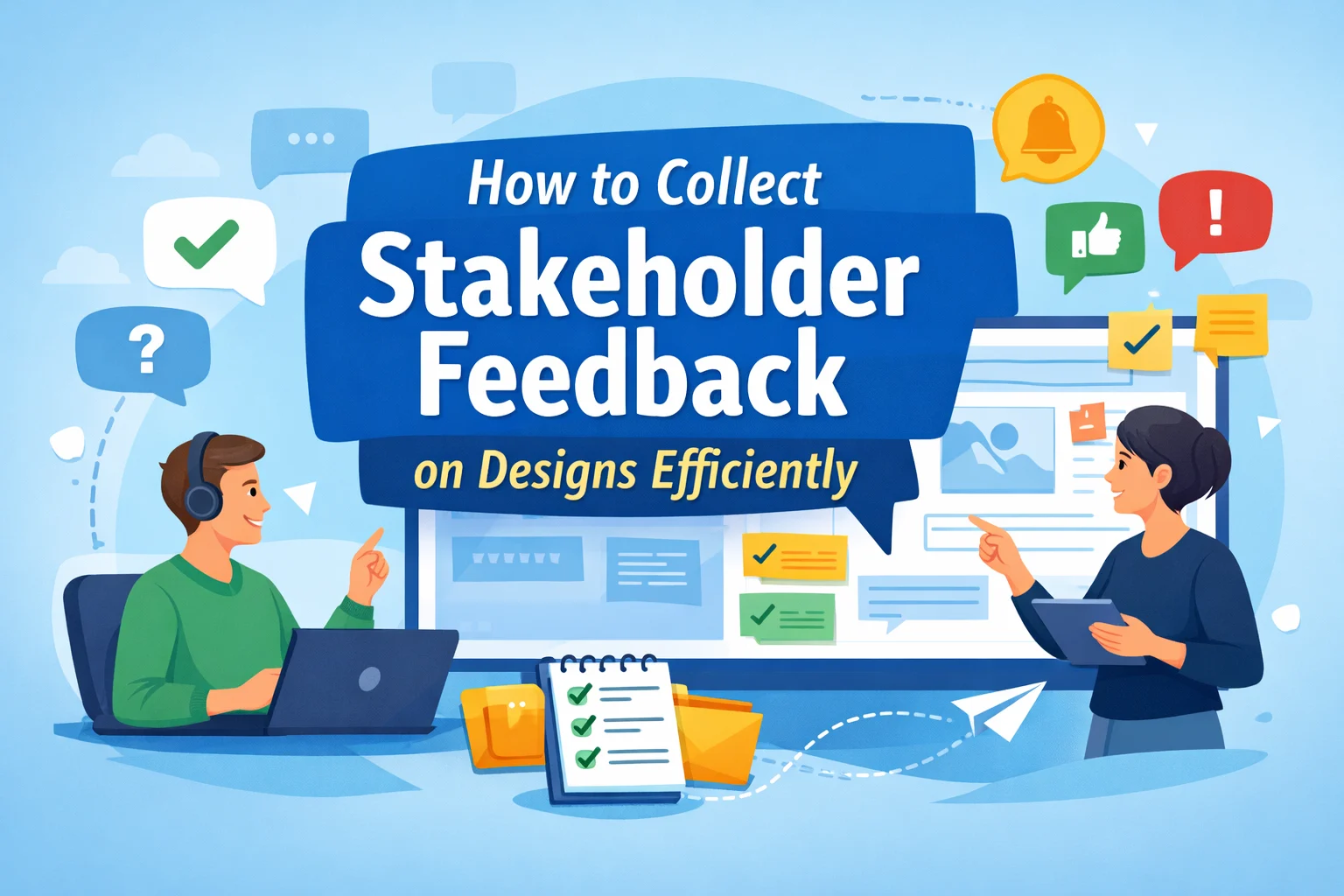
Design projects often slow down not because of creativity, but because of communication challenges. When multiple stakeholders are involved, such as product managers, marketing teams, developers, and clients, collecting stakeholder feedback on designs can quickly turn into a long cycle of meetings, scattered emails, and unclear revisions.
The most effective way to collect stakeholder feedback on designs is to create a structured process. Instead of relying on frequent meetings, teams should centralize comments, use visual feedback tools, and establish clear review workflows. This approach reduces confusion, speeds up approvals, and allows designers to focus on improving the work rather than chasing feedback.
In this guide, we will explore practical ways to collect stakeholder feedback efficiently while avoiding endless meetings.
Why Traditional Design Feedback Processes Fail
Many teams rely heavily on meetings when reviewing designs. While discussions can sometimes help, they often introduce new problems instead of solving existing ones.
Here are a few reasons traditional feedback methods fall short:
- Too many opinions at once: Large meetings often create conflicting suggestions.
- Limited visual clarity: Stakeholders describe issues verbally instead of pointing to the exact design element.
- Scattered communication: Feedback spreads across email threads, chat apps, and shared documents.
- Time-consuming clarifications: Designers spend more time understanding feedback than implementing changes.
The outcome is slower project timelines and unnecessary frustration across teams.
Instead of relying only on meetings, organizations benefit from adopting a structured approach that keeps feedback clear, visual, and centralized.
Why Stakeholder Feedback Matters in the Design Process
Before eliminating meetings entirely, it is important to recognize the value of stakeholder feedback on designs.
Effective feedback helps teams:
- Align designs with business objectives
- Identify usability issues early in the process
- Maintain brand consistency across channels
- Reduce the risk of expensive redesigns later
When feedback is structured and easy to understand, it improves both design quality and team productivity.
5 Ways to Collect Stakeholder Feedback Without Endless Meetings
1. Use Visual Feedback Instead of Verbal Feedback
One of the most common problems in design discussions is vague language.
A stakeholder might say:
“This layout feels off.”
But without visual context, designers are left guessing.
Visual feedback tools allow stakeholders to click directly on a design and leave comments tied to specific elements.
Advantages include:
- Precise comments attached to exact sections of the design
- Screenshots and annotations that provide context
- Faster understanding for designers and developers
Instead of describing problems in meetings, stakeholders can highlight them directly within the design.
2. Centralize Feedback in One Location
Scattered feedback is one of the biggest obstacles in design workflows.
Without a centralized system, comments can appear in:
- Email threads
- Slack messages
- Shared documents
- Meeting notes
When feedback is fragmented across different platforms, it becomes difficult to track decisions and revisions.
A better solution is using a single platform where feedback is collected and organized. Some teams rely on visual collaboration platforms such as BugSmash to gather comments directly on design assets. This ensures feedback remains structured and easy for designers to review.
Centralized feedback reduces confusion and speeds up decision-making.
3. Provide Clear Feedback Guidelines
Stakeholders often give broad or unclear feedback because they are unsure what information designers need.
For example, comments like the following are common:
- “Make it pop.”
- “Try something different.”
- “This section does not feel right.”
To improve the quality of feedback, provide simple guidelines that help stakeholders explain their thoughts more clearly.
Encourage stakeholders to answer questions such as:
- What specifically is not working in this design?
- What goal should this section achieve?
- Is the concern related to visuals, messaging, or usability?
Clear guidelines help transform vague opinions into actionable feedback.
4. Replace Frequent Meetings with Structured Feedback Rounds
Meetings are often scheduled because teams believe real-time discussions are necessary.
However, asynchronous feedback can often be more efficient.
Instead of organizing multiple meetings, consider implementing structured review cycles.
Example workflow:
- Designers share the latest version of a design with stakeholders
- Stakeholders leave comments within a set timeframe such as 24–48 hours
- Designers review and apply the feedback
- A final review is conducted before approval
This system ensures everyone contributes feedback without requiring multiple live discussions.
5. Prioritize Feedback Based on Impact
Not every comment should carry the same level of importance.
When all feedback is treated equally, design teams may spend time addressing minor preferences instead of critical issues.
Using a simple prioritization framework can help.
High Priority
- Usability concerns
- Compliance or branding issues
- Messaging errors
Medium Priority
- Layout improvements
- Content clarity adjustments
Low Priority
- Personal visual preferences
- Small aesthetic changes
Prioritizing feedback ensures designers focus on changes that truly improve the user experience.
Creating a Feedback-Friendly Design Workflow
Efficient feedback collection requires more than just tools. It requires a clear workflow that encourages transparency and collaboration.
Many successful teams follow this simple process:
Step 1: Share design previews early
Early feedback reduces the risk of major redesigns later.
Step 2: Encourage visual comments
Direct annotations eliminate guesswork.
Step 3: Limit the number of reviewers
Too many decision-makers slow down progress.
Step 4: Document feedback and decisions
Tracking revisions prevents repeated discussions.
Step 5: Maintain short feedback cycles
Short review cycles keep projects moving forward.
When teams adopt this structure, feedback becomes productive rather than disruptive.
Common Mistakes Teams Make During Design Reviews
Even experienced teams sometimes struggle with feedback processes.
Here are several mistakes to avoid:
Including too many stakeholders
Not everyone needs to review every design. Limiting reviewers improves focus and speeds up approvals.
Providing feedback too late
Late-stage feedback often leads to costly redesigns and missed deadlines.
Combining strategy discussions with design reviews
Design reviews should focus on improving the design itself, not broader business strategy.
Failing to document decisions
Without proper documentation, teams may revisit the same feedback repeatedly.
Avoiding these mistakes can significantly improve collaboration across teams.
Frequently Asked Questions
Why is stakeholder feedback important in design projects?
Stakeholder feedback ensures that designs align with business goals, user needs, and brand guidelines before development begins.
How can teams reduce meetings during design reviews?
Teams can reduce meetings by using visual feedback platforms, structured review cycles, and asynchronous comments.
What is the most effective way to collect stakeholder feedback on designs?
The most effective approach is using tools that allow stakeholders to comment directly on design elements rather than describing issues verbally.
How many stakeholders should review a design?
Ideally, only key decision-makers and relevant experts should participate in reviews to avoid conflicting suggestions.
Can asynchronous feedback replace meetings completely?
Not always. While asynchronous feedback handles most design reviews efficiently, occasional meetings may still help with complex decisions.
Conclusion
Collecting stakeholder feedback on designs does not have to involve endless meetings or confusing communication threads. By introducing structured feedback processes, teams can gather insights efficiently while maintaining project momentum.
Using visual feedback, centralizing comments, establishing clear guidelines, and organizing review cycles helps designers receive clear and actionable input.
When teams adopt this approach, designers spend less time chasing feedback and more time creating meaningful, high-quality work.

Leave a Reply